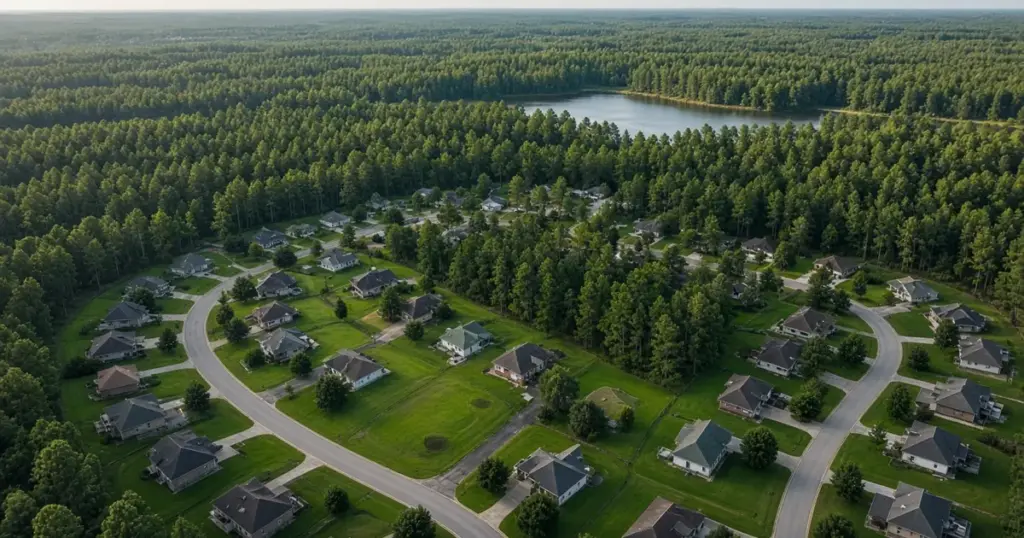
Huntsville sits at a crossroads. Interstate 45 runs north toward Madisonville and south toward Willis and Conroe, state highways head east toward Lake Livingston and the Piney Woods, and smaller farm roads lead out to rural acreage in every direction. Within an hour’s drive, you can find tight in-town lots, wooded weekend properties, waterfront homes, college rentals, and working land.
Each of those settings puts different demands on an irrigation system. This guide groups the communities around Huntsville, TX by region, explains what tends to matter for sprinklers and drip in each, and links to a detailed local article for every town and property type. It is a companion to our service areas page, which lists where we work.
Huntsville and Walker County
Huntsville
As the county seat of Walker County and home to Sam Houston State University, Huntsville mixes established neighborhoods with tall pines and oaks, newer subdivisions, and plenty of rental property. City water customers fall under the City of Huntsville’s backflow and drought rules, and the city’s development code prohibits irrigation water supply wells within city limits. Sandy loam over clay, tree roots, and heavy summer demand drive most of the repairs in town. See sprinkler repair in Huntsville, TX: a local homeowner’s guide.
New Waverly, Riverside, and Dodge
These Walker County communities are more rural, and many properties use private wells or rural water systems. Larger lots, longer pipe runs, and pump-related pressure issues are common themes. Read the local guides for New Waverly, Riverside, and Dodge. Our existing article on well-water irrigation systems in Walker County is also useful for owners outside city water service.
Rental properties near Sam Houston State University
Student rentals and investment properties need irrigation that works without much attention from tenants, plus regular checks between leases. See sprinkler care for rental properties near Sam Houston State University.
South Along I-45: Montgomery County
Willis and Conroe
Willis sits between Huntsville and Conroe along the interstate, and Conroe, the Montgomery County seat, has seen a lot of newer subdivision growth. Builder-installed systems, HOA landscaping standards, and compacted soil around new homes come up often. See the guides for Willis and Conroe.
Montgomery and Lake Conroe
West of Lake Conroe, the town of Montgomery and the surrounding area include larger lots and lake-oriented neighborhoods. Lake Conroe homes deal with slopes toward the water, wind exposure, and part-time occupancy. Read about Montgomery, TX and Lake Conroe properties.
North: Madisonville, Bedias, and Crockett
North of Huntsville, the land opens up. Madisonville, the Madison County seat, sits along I-45; Bedias is in Grimes County to the northwest; and Crockett, the Houston County seat, lies farther north and east. Expect a mix of in-town lots and acreage, with many properties relying on wells or rural water providers. See the guides for Madisonville, Bedias, and Crockett.
East: Lake Livingston and the Piney Woods
Trinity, Onalaska, Coldspring, and Pointblank
Lake Livingston, a large reservoir on the Trinity River, shapes the communities east of Huntsville. Trinity sits near the lake’s north end, Onalaska along its western shore in Polk County, and Coldspring and Pointblank in San Jacinto County toward its southern reaches. Wooded lots, weekend homes, sandy soils, and slopes toward the water are recurring themes. Read the guides for Trinity, Onalaska, Coldspring, and Pointblank.
Lake Livingston properties
Waterfront and near-water properties on Lake Livingston deserve their own discussion: runoff toward the shoreline, irrigation for part-time owners, and protecting equipment while the house sits empty. See irrigation for Lake Livingston properties.
Shared Landscapes: HOAs and Common Areas
Neighborhood entrances, medians, amenity centers, and detention areas often run on large systems that nobody looks at until something fails. Clear maintenance responsibilities, documented zone maps, and seasonal adjustments make a big difference. See HOA and common-area irrigation in Walker County, and for business properties, the efficient irrigation guide.
What Stays the Same Everywhere
Wherever your property is, a few things apply across the whole region:
- Backflow protection is required on irrigation systems connected to a drinking water supply, and testing rules come from TCEQ and your water provider. See the backflow prevention and testing guide.
- Summer demand is high, so worn parts tend to fail when the weather is hottest.
- Freezes are occasional but real, and above-ground backflow assemblies are the most exposed part of most systems.
- Tropical rain can arrive in bursts, so rain sensors and post-storm inspections matter.
- Sandy topsoil over clay is common, which affects leak behavior and scheduling.
The year-round maintenance calendar turns these into a seasonal checklist.
Questions to Ask About Your Own Property
Before calling anyone, it helps to know a few basics about your system:
- Who supplies your water: a city, a utility district or water supply corporation, or a private well?
- Where is your backflow assembly, and when was it last tested?
- How many zones do you have, and where are the valves?
- Does the property sit empty for stretches of time?
- Are there slopes, shoreline, or heavy tree cover?
Those answers shape everything from scheduling to repair priorities, and having them ready makes any service visit faster.
When to Call a Pro
Call a professional if water is running where it should not, a zone has stopped working, your backflow assembly is damaged or due for testing, or you are planning changes to the system. Rural properties with wells, waterfront lots, and large HOA systems in particular benefit from someone who has seen the same problems on similar properties. Our service areas page lists the communities we cover, and the sprinkler repair page describes the repairs we handle.
Frequently Asked Questions
Do you serve properties outside Huntsville city limits?
Yes. We work throughout Walker County and in many surrounding communities. Check the service areas page or call to confirm your location.
Are the rules different in each town?
State rules from TCEQ apply everywhere, but each city and water provider can add its own backflow, permitting, and drought requirements. Your irrigator should know what applies to your address.
What if my lake house sits empty most of the week?
Remote-capable controllers, rain sensors, and a pre-season inspection help a lot. The Lake Livingston and Lake Conroe guides cover part-time ownership in detail.
Find Help Near You
Wherever you are around Huntsville, call 346-586-6060 or request service online, and we will let you know how we can help with your sprinkler or irrigation system.