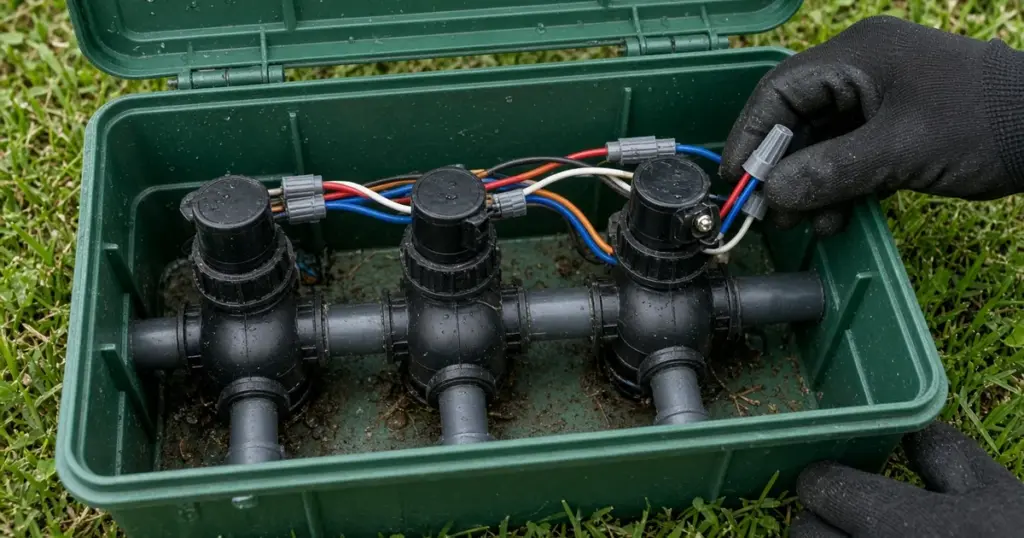
Every zone in an automatic sprinkler system depends on a chain of small parts working in order. The controller sends a low-voltage signal down a wire. That signal energizes a solenoid on top of a valve. The solenoid lets a bit of water escape from above a rubber diaphragm, the diaphragm lifts, and water rushes into the zone. When the signal stops, the process reverses and the zone shuts off.
When any link in that chain breaks, you get a zone that will not start, a zone that will not stop, or a controller error message. This guide explains each link in plain language, describes the common failures on systems on systems around Huntsville and Walker County, and points you to detailed articles on each repair.
How a Sprinkler Valve Works
Most residential irrigation valves are diaphragm valves. Water pressure from the supply side fills a small chamber above the diaphragm through a tiny port. As long as that chamber stays pressurized, the diaphragm is pushed down onto its seat and the valve stays closed.
The solenoid is an electromagnet with a small plunger. When the controller sends current, the plunger lifts and vents the upper chamber. Pressure drops above the diaphragm, supply pressure lifts it, and the zone runs. Cut the current, the plunger drops, the chamber refills, and the valve closes.
Two other parts matter for everyday use:
- The bleed screw, which lets you vent the chamber by hand to run a zone without the controller.
- The flow control, a handle or knob on many valves that limits how far the diaphragm can open.
Our article on bleed screws and flow controls explains how to use both safely, and why a flow control left half-closed is a common reason for weak zones.
Valve Styles You Will Find in Local Yards
Valves are typically installed either below ground in a valve box or above ground as anti-siphon valves with built-in backflow protection. Each has strengths and installation rules. The comparison in anti-siphon vs. inline sprinkler valves covers how to tell which you have and what that means for repairs and backflow protection.
If you do not know where your valves are, start with how to find buried or lost sprinkler valves. Valve boxes get covered by sod, mulch, and soil more often than you would think, especially in older Huntsville neighborhoods where landscapes have been redone a few times.
Common Valve Failures
Zone will not turn on
If one zone is dead while the others run, the problem is usually the solenoid, the wire to that solenoid, or a valve that is clogged or damaged. Our existing post on why one sprinkler zone will not turn on is a good first checklist.
Zone will not shut off
A zone that keeps running after the controller stops it usually means the diaphragm is torn, debris is stuck under the seat, the bleed screw is open, or the solenoid is stuck. We covered this in why a sprinkler zone will not shut off. Torn or stiff diaphragms are a frequent culprit, and the steps to replace one are in sprinkler valve diaphragm replacement.
Weeping or slow leaks
A valve that seeps a little water all the time can keep a low area soggy and feed algae in the valve box. Sand and grit, which local soils supply plenty of, are often to blame because a tiny particle on the seat keeps the diaphragm from sealing fully.
How Sprinkler Wiring Works
Each valve has two wires from its solenoid. One connects to a dedicated station wire that runs back to a numbered terminal on the controller. The other connects to a common wire shared by all the valves. The controller sends roughly 24 volts AC down the station wire, and current returns through the common.
That design means a single bad splice on the common wire can knock out several zones at once, while a damaged station wire affects only one zone.
Common Wiring Failures
- Cut wires from trenching, edging, fence posts, or new landscaping.
- Corroded splices where wires were joined with ordinary tape or indoor wire nuts instead of waterproof connectors.
- Shorted solenoids that draw too much current and trigger a controller fault.
- Rodent or root damage in shallow runs.
If your controller shows a fault or short on a station, our guide to tracing a zone fault or short explains how to narrow it down. For damaged runs, sprinkler wire repair covers splicing methods that hold up in wet soil. To check whether the solenoid itself is the problem, see testing and replacing a sprinkler valve solenoid.
A Practical Diagnostic Sequence
When a zone misbehaves, working in this order saves time:
- Check the controller. Confirm the station is programmed, the zone is not turned off, and there is no rain delay or sensor bypass issue. The controller and smart irrigation guide covers programming.
- Run the zone manually at the valve. Open the bleed screw or turn the solenoid a quarter turn. If water flows, the valve works and the problem is electrical.
- Test the solenoid. A multimeter reading across the solenoid leads tells you whether the coil is open, shorted, or normal.
- Test the wires. Check voltage at the valve while the zone is activated from the controller. No voltage means a wire or controller problem.
- Inspect the valve. If it will not open or close even manually, take it apart and inspect the diaphragm, seat, and ports.
The sprinkler troubleshooting guide puts this sequence in the context of the whole system.
When to Call a Pro
Replacing a solenoid on an easily reached valve is a reasonable DIY task. Call a professional when you cannot find the valve, when several zones fail at once, when wire tests point to a buried break you cannot locate, or when the valve body itself is cracked and needs to be cut out and replaced. Wire tracing equipment and valve locators make quick work of problems that can take a homeowner days. Our sprinkler repair team handles valve and wiring repairs throughout Walker County, and the services page lists everything else we do.
Frequently Asked Questions
Why do several zones stop working at the same time?
When multiple zones fail together, look at shared parts first: the common wire, the controller, a master valve, or the water supply. A single break in the common wire can disable every valve downstream of it.
Can I replace a sprinkler solenoid myself?
Often, yes. Turn off the water, unscrew the old solenoid, install a compatible one, and connect it with waterproof connectors. The trick is matching the solenoid to the valve brand and keeping debris out of the valve while it is open.
How long do sprinkler valves last?
There is no fixed lifespan. Water quality, debris, pressure, and how often the zone runs all play a role. Diaphragms and solenoids can often be replaced without changing the whole valve.
Need Help With a Valve or Wiring Problem?
If a zone is stuck on, stuck off, or throwing a controller error you cannot clear, we can find the fault and repair it. Call 346-586-6060 or request a service visit for help anywhere in Huntsville and Walker County.